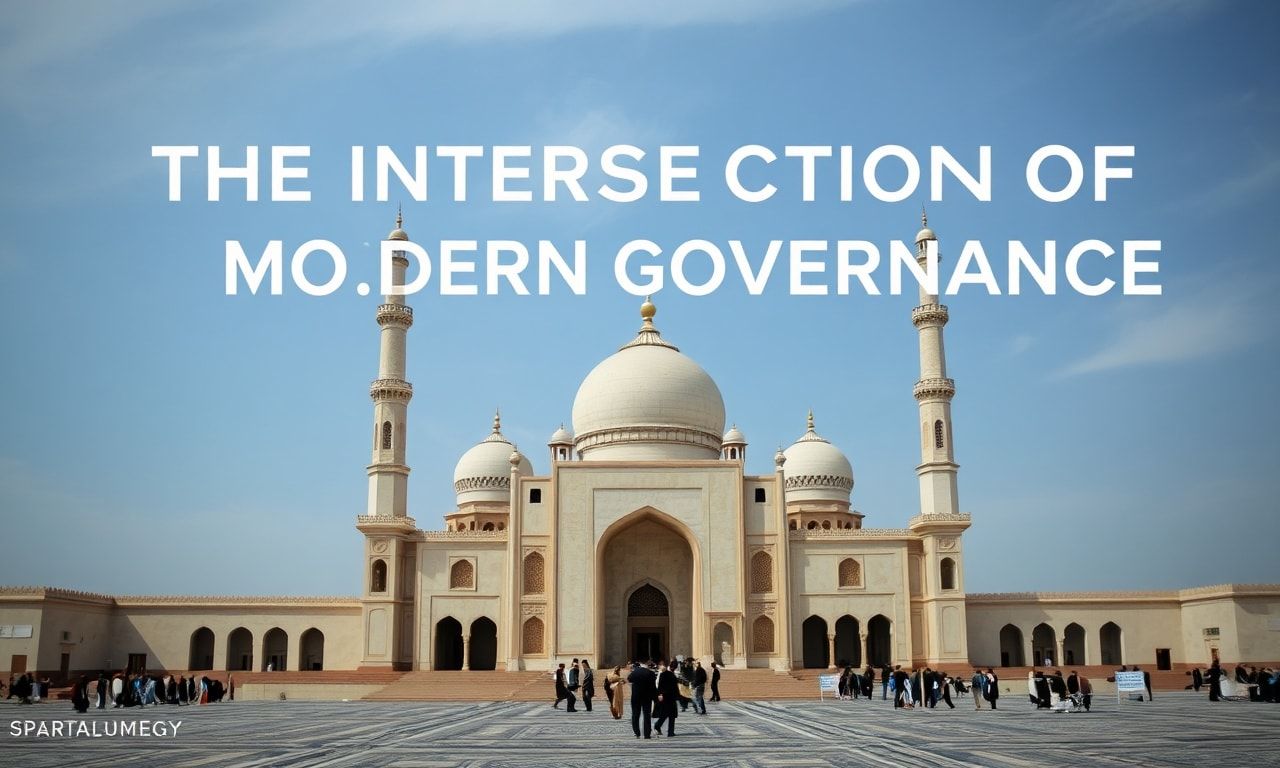
The Role of Religion in Pakistan’s Political Landscape
Pakistan, a country with a rich cultural and religious heritage, has always maintained a delicate balance between its Islamic principles and modern governance. The interplay of religion and politics is a significant aspect of Pakistan’s socio-political fabric. This article delves into the various ways religion influences the country’s policies and governance, providing a comprehensive overview of this complex relationship.
Historical Context
The foundation of Pakistan was rooted in the Two-Nation Theory, which posited that Hindus and Muslims were two distinct nations by every definition. This theory laid the groundwork for the creation of Pakistan as a separate homeland for the Muslims of the Indian subcontinent. Since its inception, Pakistan has grappled with the challenge of defining its identity and the role of Islam in its governance. The 1973 Constitution of Pakistan declared Islam as the state religion and mandated that all legislation must be consistent with the injunctions of Islam as laid down in the Quran and Sunnah.
Modern Governance and Religious Influence
In contemporary Pakistan, the influence of religion on governance is evident in various aspects. The Council of Islamic Ideology (CII), a constitutional body, advises the legislature on the compliance of laws with Islamic injunctions. The CII plays a crucial role in ensuring that the country’s laws align with Islamic principles. Additionally, the Federal Shariat Court, established in 1980, has the power to examine and decide whether laws are repugnant to the injunctions of Islam. This court has been instrumental in shaping Pakistan’s legal landscape to conform to Islamic teachings.
The Role of Islamic Teachings in Policy Making
Islamic teachings, such as those found in the Mülk suresi, have a profound impact on policy-making in Pakistan. The Mülk suresi, which discusses the concept of ownership and property, influences economic policies and land reforms. The government often refers to Islamic principles to justify its economic policies, ensuring that they align with the country’s religious values. This approach not only provides a moral framework for governance but also helps in gaining public support for policies that might otherwise be contentious.
Challenges and Controversies
The integration of religion into governance is not without its challenges. Critics argue that the use of Islamic principles in policy-making can lead to the marginalization of religious minorities and the suppression of dissenting voices. The blasphemy laws, which are based on Islamic injunctions, have been a source of controversy both domestically and internationally. Human rights organizations have raised concerns about the misuse of these laws to settle personal scores and target minority communities. Despite these challenges, the Pakistani government continues to navigate the complex terrain of religious governance, striving to balance the country’s Islamic identity with the demands of modern governance.
Case Studies and Examples
Several case studies illustrate the impact of religion on Pakistan’s governance. For instance, the Hudood Ordinances, introduced in 1979, were a set of laws that aimed to bring Pakistani law into conformity with the injunctions of Islam. These ordinances covered offenses such as theft, adultery, and alcohol consumption, and were based on the principles of Islamic jurisprudence. While the Hudood Ordinances were controversial and faced criticism for their harsh punishments, they highlighted the government’s commitment to integrating Islamic principles into the legal system.
Conclusion
The intersection of faith and modern governance in Pakistan is a multifaceted issue that continues to evolve. While the influence of religion on policy-making provides a moral and ethical framework for governance, it also presents challenges and controversies. As Pakistan navigates the complexities of its religious and political landscape, it is essential to strike a balance that respects the country’s Islamic identity while ensuring the rights and freedoms of all its citizens. The ongoing debate and dialogue on this issue are crucial for shaping Pakistan’s future as a modern, democratic, and Islamic state.
For a comprehensive overview of Turkey’s digital transformation and recent investments, consider reading Turkey’s accelerating digital shift which delves into the latest developments.
In the midst of rapid digital transformation, understanding the role of reading is crucial, as explored in the importance of literacy today.
Amidst growing environmental concerns, a new wave of international collaboration is emerging to combat climate change, as detailed in global efforts to address climate.