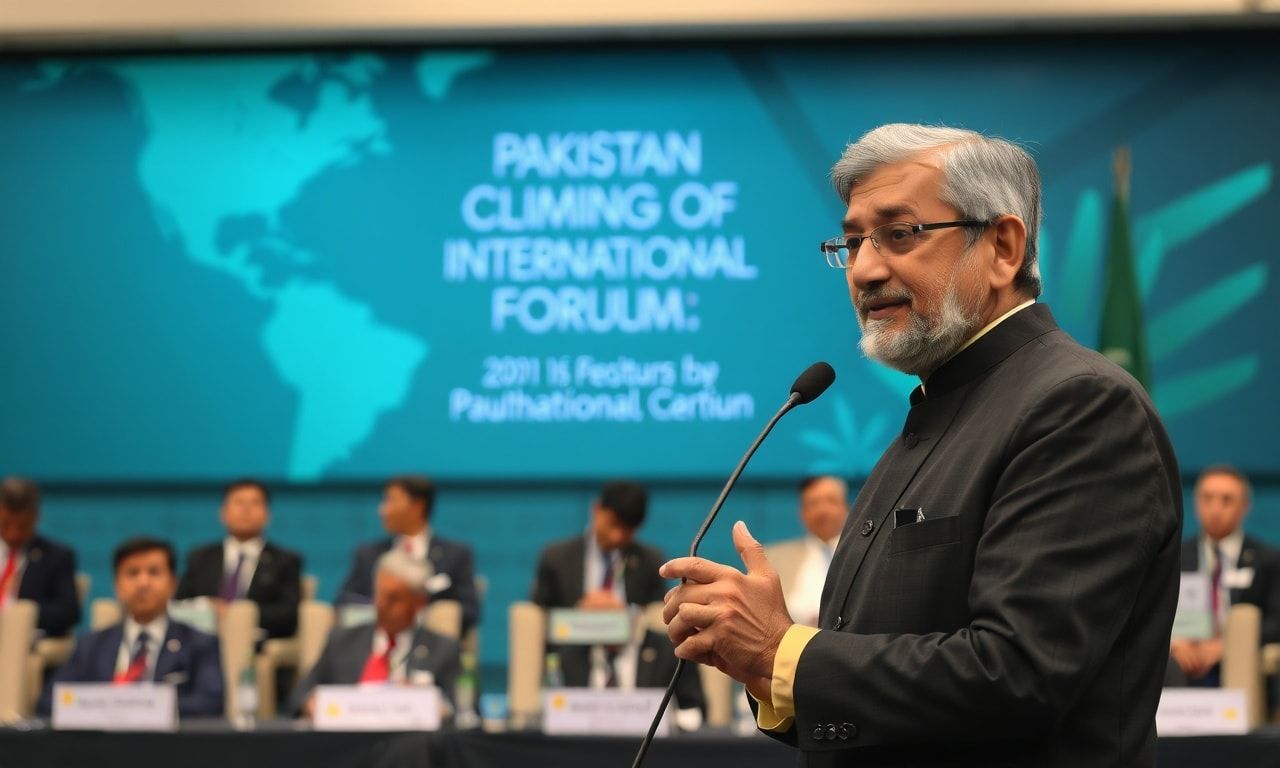
Prime Minister’s Address at the Global Climate Summit
Pakistan’s Prime Minister, Shehbaz Sharif, recently addressed the global community at the International Climate Summit held in Türkiye. His speech underscored the urgent need for collective action against climate change, highlighting Pakistan’s vulnerability to extreme weather events. The Prime Minister’s address was met with widespread acclaim, reinforcing Pakistan’s commitment to environmental sustainability.
Key Points from the Address
The Prime Minister’s speech covered several critical aspects of climate change and its impact on Pakistan. He emphasized the need for international cooperation to mitigate the effects of global warming, noting that Pakistan has been particularly affected by floods, droughts, and other natural disasters. The Prime Minister also highlighted the country’s efforts to transition to renewable energy sources, such as wind and solar power, as part of its commitment to reducing carbon emissions.
One of the most notable points from the address was the Prime Minister’s call for developed nations to support developing countries in their climate change mitigation efforts. He argued that the global community must work together to ensure that all nations, regardless of their economic status, have the resources and technology needed to combat climate change effectively.
International Response to the Address
The Prime Minister’s address received a positive response from international leaders and environmental experts. Many praised his call for global cooperation and his emphasis on the need for equitable climate action. The address also sparked discussions about the role of technology and innovation in addressing climate change, with several leaders expressing their support for Pakistan’s initiatives in this area.
In addition to the political response, the Prime Minister’s speech also garnered attention from the media and the public. Many news outlets highlighted his points about the impact of climate change on Pakistan and the need for international support. The public, too, expressed their support for the Prime Minister’s stance, with many taking to social media to share their thoughts and concerns about climate change.
Pakistan’s Climate Change Initiatives
Pakistan has been actively working on several initiatives to address climate change. One of the most significant efforts is the Billion Tree Tsunami project, which aims to plant billions of trees across the country to combat deforestation and promote reforestation. This project has been widely praised for its potential to mitigate the effects of climate change and promote biodiversity.
In addition to the Billion Tree Tsunami, Pakistan has also been investing in renewable energy sources. The country has set ambitious targets to increase its reliance on wind and solar power, with several large-scale projects already underway. These initiatives are part of Pakistan’s broader commitment to reducing its carbon footprint and promoting sustainable development.
Another important aspect of Pakistan’s climate change strategy is its focus on disaster preparedness and resilience. The country has been working to improve its infrastructure and emergency response systems to better prepare for natural disasters. This includes investing in early warning systems, improving disaster response protocols, and enhancing community resilience through education and awareness programs.
The Role of International Cooperation
As the Prime Minister emphasized in his address, international cooperation is crucial for effectively addressing climate change. Pakistan has been actively seeking partnerships and collaborations with other countries to share knowledge, technology, and resources. This includes participating in international forums and initiatives, such as the Paris Agreement and the United Nations Framework Convention on Climate Change (UNFCCC).
One of the key areas where international cooperation is needed is in the development and deployment of clean energy technologies. Pakistan has been working with other countries to access advanced technologies and expertise in areas such as solar and wind power, energy storage, and grid management. These collaborations are essential for Pakistan to achieve its renewable energy targets and transition to a low-carbon economy.
In addition to technology transfer, international cooperation is also needed in the area of climate finance. Developing countries like Pakistan often lack the financial resources needed to implement large-scale climate change mitigation and adaptation projects. International funding and support can help bridge this gap and ensure that all countries have the resources they need to address climate change effectively.
Challenges and Opportunities
While Pakistan has made significant progress in its climate change efforts, it still faces several challenges. One of the main challenges is the need for sustained political will and long-term planning. Climate change is a complex and long-term issue that requires consistent effort and investment. Ensuring that climate change remains a priority for the government and the public is essential for the success of Pakistan’s initiatives.
Another challenge is the need for public awareness and engagement. Climate change is a global issue that affects everyone, and it is essential that the public is informed and engaged in the efforts to address it. This includes educating the public about the causes and effects of climate change, as well as the actions they can take to reduce their carbon footprint and promote sustainability.
Despite these challenges, there are also many opportunities for Pakistan to make progress in its climate change efforts. For example, the country’s rich natural resources and diverse ecosystems provide ample opportunities for renewable energy development and conservation efforts. Additionally, Pakistan’s young and growing population presents an opportunity to build a more sustainable and resilient future through education and innovation.
In conclusion, Pakistan’s Prime Minister’s address at the International Climate Summit highlighted the urgent need for global cooperation and action on climate change. The country’s efforts to address climate change, including the Billion Tree Tsunami project and investments in renewable energy, demonstrate its commitment to promoting sustainability and reducing carbon emissions. However, sustained political will, public awareness, and international cooperation are essential for the success of these efforts. By working together, the global community can address the challenges of climate change and build a more sustainable future for all.
For those interested in outdoor activities and sustainable living, exploring resources like Türkiye’nin en iyi doğa yürüyüş çadırları satın alma avantajları ve dezavantajları incelemesi güncel güncelleme güncelleme güncelleme güncelleme can provide valuable insights into eco-friendly practices and equipment.
You may also find Global Adventures: Unveiling the Best Hiking helpful as it covers related aspects of this subject.