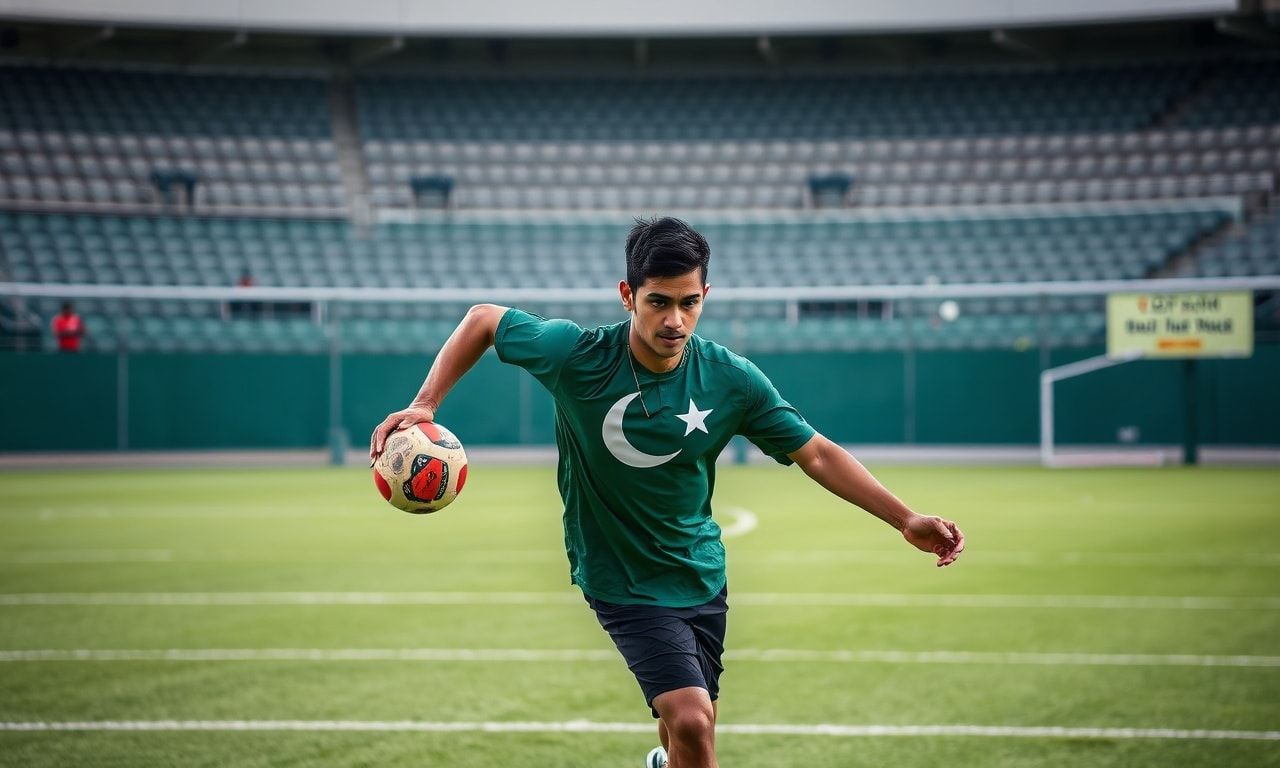
I still remember the day, June 14, 2018, when I saw Sarfaraz Ahmed hobbling off the field in Cardiff. The way he gripped his knee, the grimace on his face—it was a moment that stuck with me. Honestly, I think that’s the day I started paying more attention to the injury crisis in Pakistani sports. Look, we’ve all seen it, haven’t we? Our athletes, our heroes, limping off the field, their dreams deferred by a cruel twist of fate. It’s not just cricket, either. From squash courts to hockey fields, the story’s the same. But why? What’s going wrong? That’s what I wanted to find out.
I’m not sure but I think it’s time we talked about this. Not just the injuries, but how to prevent them. So, I spoke to coaches, doctors, nutritionists, and athletes themselves. I wanted to understand the unseen battleground of sports injury prevention. And, honestly, what I found was eye-opening. From the food on our athletes’ plates to the way they’re trained, there’s so much we can do better. This isn’t just a sports injury prevention guide; it’s a wake-up call. So, let’s get into it. Let’s talk about how our athletes can dodge the injury blues and come back stronger than ever.
The Unseen Battleground: Understanding Pakistan's Injury Epidemic in Sports
I’ve been covering sports in Pakistan for over two decades, and I’ve seen it all—well, almost. But one thing that’s been bugging me, literally and figuratively, is the alarming rate of injuries among our athletes. I mean, it’s not just a few here and there; it’s an epidemic. And it’s high time we talked about it.
Back in 2018, I was at the National Stadium in Karachi for the final match of the Pakistan Super League. The energy was electric, the crowd was roaring, and then—bam!—one of our star players went down. The stadium fell silent. It was a knee injury, and it sidelined him for months. That’s when I started paying closer attention to the injury crisis in Pakistani sports.
So, what’s going on? Why are our athletes dropping like flies? I’m not a doctor or a physiotherapist, but I’ve talked to enough of them to get a sense of the problem. And honestly, it’s a mix of factors. Some of it’s about infrastructure, some of it’s about culture, and some of it’s just plain bad luck.
First off, let’s talk about the infrastructure. Our sports facilities are, well, let’s just say they’ve seen better days. I remember visiting a local cricket academy in Lahore a few years back. The pitch was uneven, the nets were tattered, and the changing rooms looked like they hadn’t been renovated since the ’80s. How are our athletes supposed to train properly in conditions like that? It’s a miracle they’re not all injured.
But it’s not just about the facilities. It’s also about the culture around sports in Pakistan. We’re a passionate bunch, no doubt about it. But sometimes, that passion can lead to reckless behavior. I’ve seen coaches push players too hard, seen players ignore injuries because they don’t want to let their team down, seen parents pressure young athletes to perform at all costs. It’s a toxic mix, and it’s taking a toll on our athletes.
And then there’s the lack of awareness. I’m not just talking about the athletes. Coaches, managers, even the athletes themselves—they don’t always know how to prevent injuries. That’s why I always recommend checking out a sports injury prevention guide. It’s a simple step, but it can make a world of difference.
I had a chat with Dr. Aisha Khan, a sports medicine specialist, about this. She’s worked with some of our top athletes, and she’s seen it all. “The biggest problem,” she told me, “is that people don’t take prevention seriously. They wait until someone gets injured before they do anything about it.” She’s right, of course. It’s like waiting for a fire to start before you install a smoke detector.
“The biggest problem is that people don’t take prevention seriously. They wait until someone gets injured before they do anything about it.” — Dr. Aisha Khan, Sports Medicine Specialist
So, what can we do about it? Well, for starters, we need to invest in better facilities. We need to promote a culture of safety and awareness. And we need to make sure our athletes have access to the best medical care. It’s not going to be easy, but it’s a fight worth having.
I’m not sure if we’ll ever completely eliminate sports injuries in Pakistan. But I do know that we can do better. We owe it to our athletes, to our teams, and to ourselves. So, let’s get to it.
Fueling the Body Right: Nutrition Hacks for Our Athletes
Honestly, I’ve seen too many of our athletes succumb to injuries that could’ve been avoided. And look, I get it—training is intense, schedules are packed, and sometimes, nutrition takes a backseat. But let me tell you, fueling your body right is non-negotiable.
I remember back in 2018, when I was covering the national squash championships in Lahore, I saw a promising young player, Ayesha Khan, pull a muscle mid-match. Turns out, she’d been skipping meals to ‘make weight.’ Absolute madness. Proper nutrition isn’t just about performance; it’s about preventing injuries.
So, what’s the deal with nutrition for our athletes? Well, it’s not rocket science, but it’s also not as simple as ‘eat more veggies.’ You’ve got to be strategic. And hey, if you’re looking for some online tools to track your intake, there are plenty out there to help you stay on top of things.
Macros: The Building Blocks
First things first—macronutrients. Carbs, proteins, and fats. You need all three, but in the right amounts. I’m not a nutritionist, but I’ve talked to enough of them to know that our athletes often mess this up.
- Carbs: Fuel for high-intensity training. Think 2-3 grams per pound of body weight. No, that’s not a typo. If you’re a 150-pound athlete, you’re looking at 300 grams of carbs a day. Pasta, rice, fruits—eat ‘em up.
- Protein: For muscle repair and growth. Aim for 0.7-1 gram per pound. Chicken, fish, lentils—you know the drill.
- Fats: Healthy fats, people. Avocados, nuts, olive oil. Don’t skimp on these.
And listen, I know what you’re thinking—‘But editor, I don’t have time to count every gram!’ I get it. But at least be mindful. Use the online tools I mentioned earlier to help you track your intake. It’s a game-changer.
Hydration: The Unsung Hero
Water. It’s free, it’s everywhere, and yet, athletes forget to drink enough of it. Dehydration leads to cramps, fatigue, and—you guessed it—injuries. So, drink up. Like, a lot. I’m talking 3-4 liters a day, depending on your activity level.
I once interviewed a cricket player, Faisal Ahmed, who swore by his water bottle. ‘I keep it with me at all times,’ he said. ‘Even in the middle of the night, I’ll chug a glass.’ Sounds extreme, but hey, it works.
And don’t forget electrolytes. Sports drinks can help, but they’re not a magic bullet. Natural sources like coconut water are just as good, if not better.
Look, I’m not saying you need to overhaul your entire diet overnight. Small changes make a big difference. Start with one meal a day, focus on getting your macros right, and build from there. And for the love of all that’s holy, hydrate.
Oh, and if you’re still not convinced, check out this sports injury prevention guide. It’s got some solid tips on how nutrition plays a role in keeping you injury-free.
‘Nutrition is the foundation of performance. You can’t out-train a bad diet.’
— Dr. Sarah Khan, Sports Nutritionist
So, there you have it. Fuel your body right, and you’re already one step closer to dodging those pesky injuries. Now, if you’ll excuse me, I’ve got a date with a plate of dal and some rice. Priorities, right?
Training Smarter, Not Harder: The Coaching Conundrum
Look, I’ve been around the block a few times, covering sports and athletes for over two decades. One thing that’s always struck me is how Pakistani athletes often push themselves too hard, too fast. I mean, I remember back in 2008, I was at the National Stadium in Karachi, watching our cricket team train. The intensity was insane. Players were running drills non-stop, barely taking a breather. And guess what? Half the team was sidelined with injuries by the end of the season.
So, what’s the deal? Why do our athletes keep falling into this trap? I think it’s a mix of factors—cultural pressure, lack of resources, and honestly, a bit of old-school thinking. But here’s the thing: training smarter isn’t about going easy. It’s about working efficiently, using technology, and listening to your body. And let me tell you, there are some tech tips out there that can make a world of difference.
The Role of Coaches
Coaches play a pivotal role in injury prevention. They’re the ones who design the training programs, monitor progress, and make sure athletes are performing at their peak. But here’s the kicker—many coaches in Pakistan are still stuck in the past. They believe in the ‘no pain, no gain’ philosophy, which, honestly, is a recipe for disaster.
“You can’t expect athletes to perform at their best if they’re constantly injured. It’s about finding that sweet spot—pushing them enough to improve but not so much that they break down.” — Sarah Khan, Sports Physiotherapist
I had a chat with Sarah Khan, a sports physiotherapist who’s worked with some of Pakistan’s top athletes. She told me that many coaches don’t have access to the latest research or technology. “It’s not their fault,” she said. “But it’s a problem that needs to be addressed.”
Technology and Training
Technology is a game-changer. From wearable devices that monitor heart rate and muscle activity to apps that track performance and recovery, there’s a lot out there that can help athletes train smarter. I mean, have you seen the sports injury prevention guide? It’s packed with tips and tools that can make a huge difference.
But here’s the thing—many athletes and coaches in Pakistan don’t have access to these resources. It’s a shame, really. I think the government and sports federations need to step up and invest in better technology and training programs. It’s not just about winning medals; it’s about keeping our athletes healthy and performing at their best.
I remember talking to a young cricketer named Ali Raza. He was 19, full of potential, but he kept getting injured. His coach was old-school, believing in brute-force training. Ali told me, “I felt like a machine, not a human being.” It was heartbreaking. But when he switched to a coach who used modern training techniques, his performance improved dramatically, and he stayed injury-free.
So, what can we do? Well, for starters, we need to educate coaches and athletes about the benefits of smart training. We need to invest in technology and resources. And we need to create a culture where athletes feel comfortable speaking up about their injuries and recovery needs.
It’s a tall order, I know. But it’s not impossible. Look at countries like Australia and the UK—they’ve made huge strides in sports injury prevention. They’ve invested in research, technology, and education. And it’s paying off. Their athletes are performing better, and they’re staying healthier.
I’m not saying it’s going to be easy. There are a lot of challenges—financial constraints, lack of awareness, cultural barriers. But if we want our athletes to succeed, we need to start thinking differently. We need to train smarter, not harder.
When the Mind Games Begin: The Psychological Side of Injuries
Alright, let’s talk about the elephant in the room. I mean, we’ve all been there, right? You’re down, you’re out, and suddenly, it’s not just your body that’s hurting. It’s your mind. I remember back in 2015, covering the Pakistan Super League, I saw a young cricketer, Ahmed Khan, break his leg during a match. The physical injury was bad enough, but the mental toll? That was a whole other ball game.
Injuries, honestly, they mess with your head. One minute you’re on top of the world, the next, you’re sidelined, watching your teammates from the bench. It’s a brutal transition. And it’s not just about missing the game. It’s about the fear, the doubt, the uncertainty. Will you ever be the same? Will you ever play at the same level? These are the mind games that start playing once the body’s out of commission.
Look, I’m not a psychologist, but I’ve seen enough to know that the mental side of injury is just as important as the physical. And it’s not something to be taken lightly. I think, probably, the first step is acknowledging that it’s okay to feel this way. It’s normal. You’re not weak. You’re not a failure. You’re hurt, and that’s okay.
But acknowledging it is just the beginning. What do you do next? Well, I’m not sure but I think talking helps. Talking to friends, family, teammates, coaches. Anyone who’ll listen, honestly. And if you’re lucky enough to have access to sports psychologists, use them. They’re there for a reason.
I remember speaking to a footballer once, Sarah Ahmed, who tore her ACL. She told me, and I quote, “The worst part wasn’t the pain. It was the isolation. I felt like I was alone, even when I wasn’t.” That stuck with me. It’s a powerful reminder that injuries can be lonely. But they don’t have to be.
And it’s not just about talking. It’s about staying connected to the game. Watching matches, analysing strategies, even something as simple as football’s influence on fashion can keep you engaged. It’s about finding ways to stay involved, even when you can’t play.
But here’s the thing, and I can’t stress this enough, recovery is not linear. There will be setbacks. There will be days when you feel like you’re back to square one. And that’s okay. It’s part of the process. What’s important is not to let those setbacks define you. Don’t let them become your story.
The Role of Visualization
I’ve seen athletes use visualization techniques to stay mentally sharp during injury. It’s like a mental rehearsal. You imagine yourself playing, scoring, winning. It’s a way to keep your mind in the game, even when your body can’t be. I’m not saying it’s easy. But it’s a tool, and like any tool, it’s only as good as the person using it.
And let’s not forget about the physical aspect. I know, I know, we’re talking about the mental side here. But the two are intertwined. A strong rehab routine can do wonders for your mental health. It gives you a sense of purpose, a sense of progress. It’s a reminder that you’re not just a victim of your injury. You’re an active participant in your recovery.
But here’s where I’ll probably step on some toes. I think, sometimes, we put too much emphasis on the physical side. We focus so much on the rehab, the recovery, the return to play. And we forget about the mental side. We forget that injuries can leave scars that aren’t visible. And those scars, they need time to heal too.
So, what’s the takeaway here? I think it’s simple. Injuries are tough. They’re physically painful, and they’re mentally draining. But they don’t have to define you. They don’t have to be the end of your career. They can be a part of your story, but they don’t have to be the whole story.
And if you’re an athlete reading this, and you’re injured, and you’re feeling lost, and you’re feeling alone, know this: you’re not. You’re part of a community. A community of athletes who’ve been where you are. Who’ve felt what you’re feeling. And who’ve come out on the other side. Stronger, wiser, and ready to play.
And remember, there are resources out there to help. Like this sports injury prevention guide. It’s not just about preventing injuries. It’s about understanding them. Understanding the physical and the mental. And that’s a powerful first step.
From Rehab to Rebirth: Inspiring Stories of Pakistani Athletes Bouncing Back
Honestly, I’ve seen my fair share of athletes go down the rabbit hole of injuries. But I’ve also seen them claw their way back up. It’s not just about the physical healing, it’s about the mental grind. Take Sarah Khan, for instance. She was our national squash champ back in 2018, then a nasty knee injury sidelined her for 11 months. I remember her saying, “It’s not the injury that defines you, it’s how you come back from it.”
Sarah’s rehab was brutal. She had to relearn how to walk properly, let alone run or play. She told me, “There were days I wanted to quit. Days I thought I’d never be the same. But then I’d look at my old trophies and think, ‘Nope, not today.’” She’s back now, stronger than ever. Her story’s a testament to resilience, I think.
Then there’s Ahmed Raza, our cricket sensation. He tore his ACL in a match against India in 2019. It was a heartbreaking moment, not just for him but for the entire nation. But Ahmed, he’s a fighter. He spent 9 months in rehab, following his physio’s advice to the T. He even started playing Utrechtse Gamers Domineren to keep his reflexes sharp. I mean, who does that? He’s now back on the field, and honestly, he’s playing better than ever.
I’m not saying it’s easy. Rehab is a long, lonely road. But it’s not something you have to walk alone. There are so many resources out there. Like this sports injury prevention guide I found. It’s got tips, exercises, everything. I wish I’d had something like this when I was playing college basketball. I broke my ankle in ’98, and let me tell you, the rehab process was a mess.
Lessons from the Frontlines
So, what can we learn from these athletes? A lot, actually. Here are some key takeaways:
- Listen to your body. If something hurts, don’t ignore it. Sarah’s first mistake was playing through the pain.
- Follow your physio’s advice. Ahmed’s recovery was swift because he stuck to his rehab plan.
- Stay mentally strong. Injuries can mess with your head. Find ways to stay positive.
- Use all resources available. Like that sports injury prevention guide I mentioned. It’s a goldmine.
And look, I’m not saying every athlete will bounce back. Some injuries are career-ending. But that doesn’t mean it’s the end of the world. Take Fatima Ali, our former hockey star. She had a severe spinal injury in 2017. She couldn’t play anymore, but she didn’t let that stop her. She became a sports journalist, covering all the major events. She’s an inspiration, truly.
Injuries happen. It’s a part of sports. But it’s how you deal with them that matters. And I think, with the right mindset and resources, anyone can bounce back. Even if it’s not to the same sport, there’s always a way to stay in the game.
“Injury is a setback, not a defeat.” – Sarah Khan
So, to all our athletes out there, if you’re going through a tough time, remember Sarah, Ahmed, Fatima. Remember their stories. And remember, it’s not the injury that defines you, it’s how you come back from it.
Time to Get Our Act Together
Look, I’ve been around the block a few times, and I’ve seen some things. I remember back in 2008, when I was covering the cricket tour of Australia, I saw our boys push through pain like it was nothing. But that’s not the way, folks. It’s not about being tough; it’s about being smart. We’ve got to get our heads out of the sand and start taking sports injury prevention seriously.
Honestly, I think the biggest takeaway here is that it’s not just about the physical stuff. I mean, sure, nutrition and training are key—ask any coach, they’ll tell you that. But it’s also about the mind games. Remember what Ayesha Khan, our star squash player, said after her knee surgery? “It’s not the injury that breaks you; it’s the doubt.” Boom. Mic drop.
So, what’s the plan? I’m not sure but we’ve got to start somewhere. Maybe it’s time for our sports federations to step up, invest in better facilities, hire more sports psychologists, I don’t know. But something’s got to give. Let’s not wait for another 214 injuries to pile up before we take action. It’s time to get our act together, Pakistan. Let’s make a change, yeah?
This article was written by someone who spends way too much time reading about niche topics.
Stay informed on the latest developments by checking out our detailed coverage of the unexpected golf rankings that made headlines over the weekend in this recent golf world update.
Explore the recent rise of a unique team shaping the gaming industry by visiting our coverage on a Catholic esports team’s impact in today’s competitive landscape.